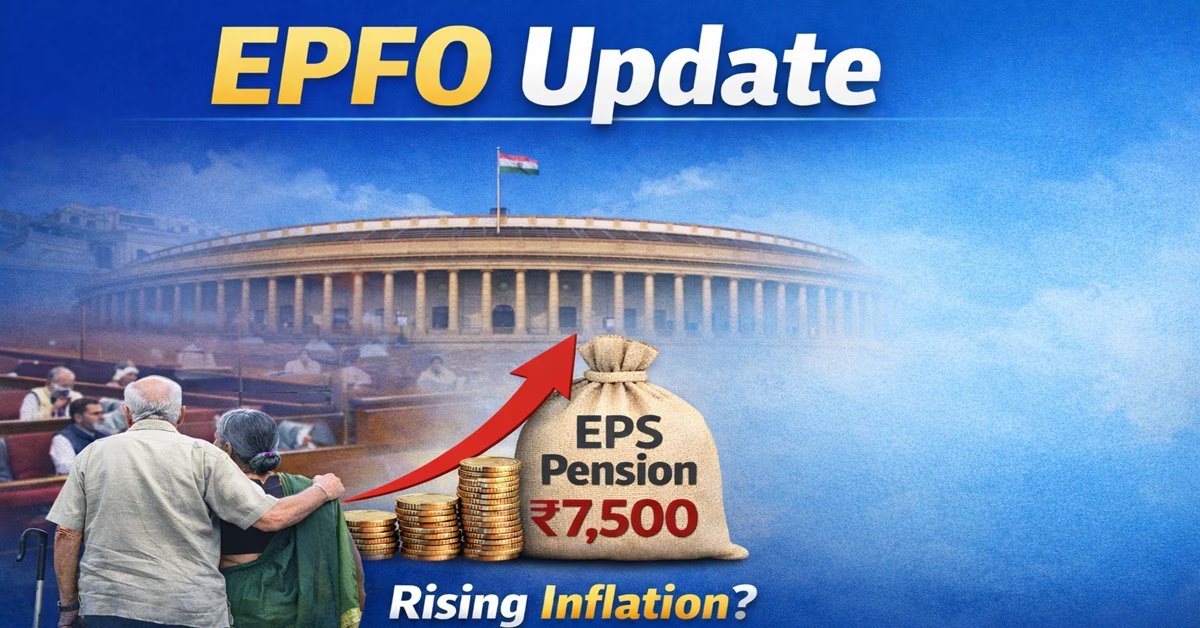
EPFO Big Update 2026: For millions of private sector employees in India, the Provident Fund is more than just a monthly deduction from salary. It is a financial cushion that assists people at the time of their retirement, emergencies and uncertain times. Employees deduct a part of their Payroll checks in the PF account, and they hope to get a secure future. Nearly 12 years later, a significant change is proposed to the EPFO rules, which could benefit the salaried class all over the country.
The government is reportedly considering raising the EPF wage limit from ₹15,000 to ₹25,000 per month. This decision can have a direct impact on the employees’ take-home pay, PF contribution and their pension benefits upon retirement. This is one of the biggest changes for PF subscribers in years, as it was last updated back in 2014.
Why the Government is Planning This Change

The cost of living and inflation rate, along with the average salaries, have risen considerably in India over the past decade. But the EPF wage ceiling has remained at ₹15,000 since 2014 despite the income slip. This meant that many middle-class workers were denied access to social security schemes associated with EPFO. The proposed hike to ₹25,000 will help close this gap and provide greater retirement security for private sector employees. The government feels that raising the PF salary limit will enable the employees to contribute to a bigger retirement corpus, besides enhancing the pension amount in the future.
EPFO Big Update 2026: How This Change May Affect Your Salary
One of the main worries for workers is the effect it will have on their take-home pay. At present, when the basic salary exceeds ₹15,000, PF contributions are mostly being computed on the ceiling rate of ₹15,000. But in the event of the ceiling being raised to Rs. 25,000, the amount of PF deduction will also be increased for the employees earning between Rs. 15,000 and Rs. 25,000.
It involves a small reduction in in-hand salary as a small proportion of salary will be credited to the PF account every month. This might seem a bit discouraging at first, but if you think of the long-term gains, they might be much more significant. Those who are looking to save more in their pension plans will find that larger contributions to their plans lead to better retirement security.
Bigger PF Savings and Better Retirement Security
EPF contribution rules require that equal amounts of money be placed into the EPF by the employer and the employee. Therefore, the higher the employees’ contribution is, the higher the contribution of the employers will be.
This results in an increased PF corpus over the years, which makes employees’ retirement more secure. Higher monthly savings can also have a big impact on total savings in the long run, as PF funds will also pay interest on the monthly contributions. This might be a great financial lifeline post-retirement for many people who have a fixed income.
EPFO Big Update 2026: Pension Benefits May Also Increase
One of the other significant advantages of the proposed wage cap increase is the positive effect on pension income. The EPF contribution is one portion of the employer’s contribution, with another portion going into the Employees’ Pension Scheme (EPS). An increase in the wage ceiling to ₹25,000 can lead to an increase in the contribution to EPS.
Therefore, the employees may get a better monthly pension after they retire. The switch could be particularly advantageous for the private sector users, who have a strong dependence on EPFO pension benefits in their old age. The government could make a final decision on this proposal in the final week of May, reports say.
What This Means for Private Sector Employees

This could provide financial relief to lakhs of private company employees in the long run. Your monthly take-home pay may decrease somewhat, but the benefits you will see in the future due to the higher amount of PF savings and pension benefits may provide a stronger financial stability. With the growing significance of retirement planning these days, this move can benefit employees to have a better and less stressful life when they retire.
FAQs
The new EPF ceiling wage is suggested to be?
The government is reportedly mulling raising the EPF Wage ceiling from ₹15000 to ₹25000.
What was the time of the last revision in EPF wage limit?
The last update was done in 2014 when the limit rose from ₹6,500 to ₹15,000.
Will this affect the payout of wages to employees?
Yes, the in-hand salary may be slightly less for employees earning from ₹15,000 to ₹25,000 because their PF deductions will be higher.
Which of the following is the greatest benefit of this change?
The most significant benefit of this is increased pension benefits and higher PF savings after retirement.
When will be the best time for the government to announce this decision?
The government could make a final decision in the final week of May, reports said.
Disclaimer: The information in this article is for informational purposes only. In fact, the proposed wage ceiling revision in EPFO is yet to be officially notified. The final rules, calculation of contributions and pension benefits will be determined based on the government notification and EPFO guidelines. Readers should check the official updates before taking any financial decisions.
Also Read:
PM Kisan Yojana Update: Start Your Own Business With Rs. 10 Lakh Subsidy
CM Yuva Yojana 2026: Get Interest-Free Loan up to ₹5 Lakh to Start Your Business
Arunachal Pradesh DA Hike 2026: Government Increases Dearness Allowance to 6%